

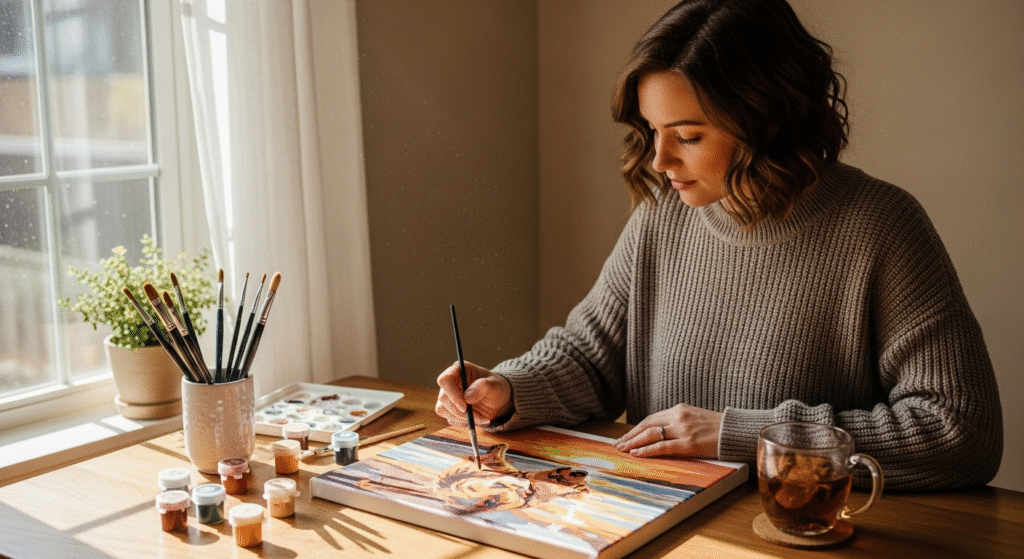
We’ve glorified productivity to the point that rest feels like laziness, and creativity feels like a luxury.
But here’s the truth: constantly being “on” — performing, producing, achieving — is silently draining you. It’s why you’re tired, even when you sleep. It’s why you feel disconnected, even when you’re surrounded by people. And it’s why you need something more than just rest — you need release.
That’s where painting comes in. You don’t have to be an artist. You don’t have to know what you’re doing.
You just need a brush, some colour, and the willingness to give your brain something it doesn’t have to optimise.
In this article, you’ll learn why creative painting is more than just a fun hobby — it’s a powerful, overlooked tool for creating emotional balance, mental clarity, and a deeper connection to yourself.
Balance Is More Than Just Rest
When people talk about “balance,” they often mean switching off — sleep, meditation, a weekend without emails.
But true balance goes deeper. It’s not just about stopping — it’s about restoring. And that requires more than silence. It requires expression.
Your brain and body need outlets. Not just passive recovery, but active release. Something that lets your thoughts flow, your emotions breathe, and your hands do something other than scroll or type.
Creative painting gives you that. It’s an act of doing that doesn’t demand performance. You don’t need results. You don’t need approval. You just need you.
Why Creative Painting Helps You Reconnect
When you paint, your brain shifts gears. You move from logical, linear thinking into sensory, intuitive expression.
That’s not just poetic — it’s biological.
Painting activates the right hemisphere of your brain — the part responsible for imagination, emotion, and spatial awareness. This shift:
- Reduces stress hormones like cortisol
- Encourages a meditative, flow-like state
- Helps process emotions you might not have words for
In short: painting pulls you out of your head and into your body. Out of anxiety loops and into presence. It creates space to feel, without needing to explain yourself.
And in a world that constantly asks you to perform and explain, that kind of freedom is rare — and vital.
You Don’t Need to Be “Creative” to Paint
Let’s bust the biggest myth upfront: you don’t need to be an artist.
You don’t need talent. You don’t need skill. You just need a willingness to play.
Creative painting isn’t about creating masterpieces — it’s about making a mess that matters. Splash colour. Draw shapes. Let the brush wander. There are no rules.
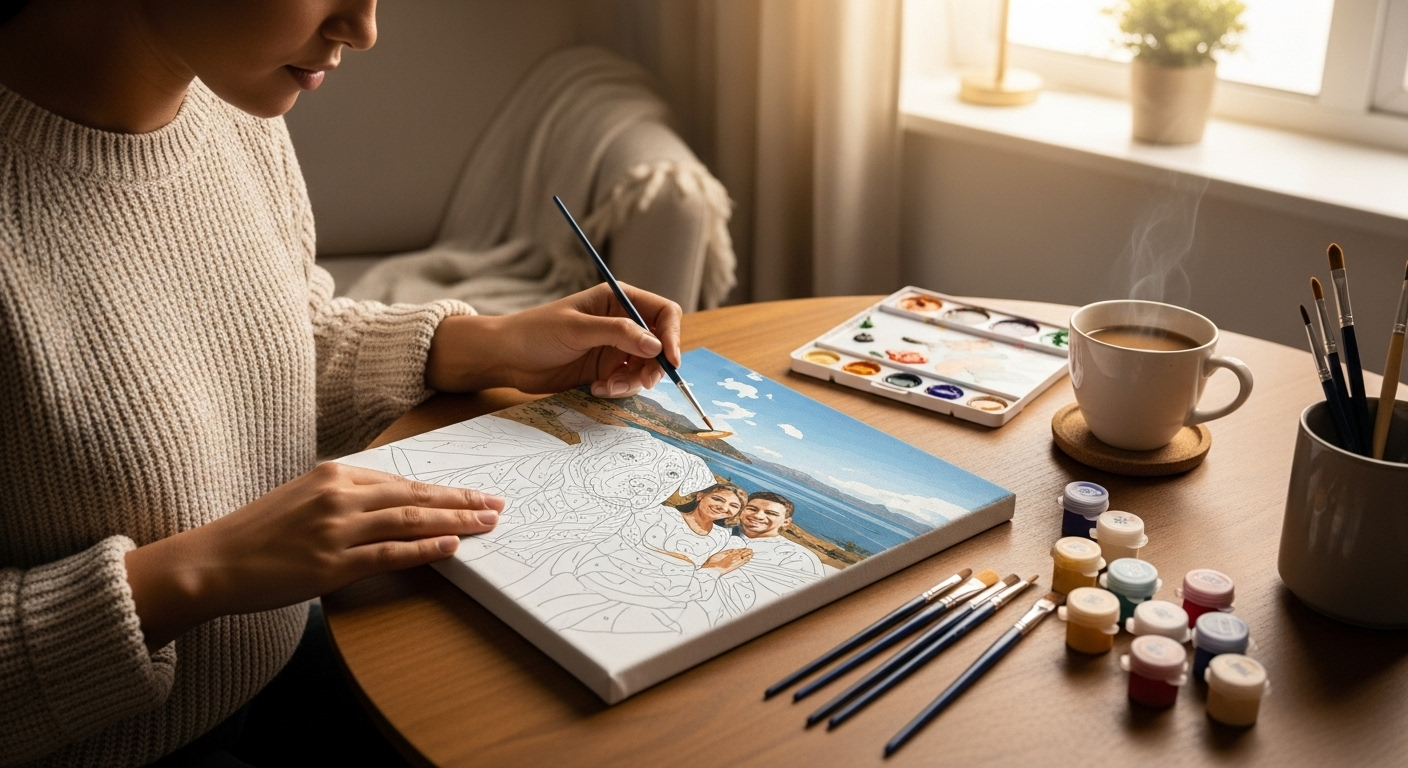
If you need a bit of structure, try a customisable paint by numbers kit. These kits let you paint personal photos, pets, or special memories — making the process even more emotionally fulfilling. It’s a creative win without the fear of the blank canvas.
Remember: this isn’t art class. There are no grades. There’s only you and the canvas. That’s the point.
What Happens When You Paint Regularly
Start painting regularly — even 15 minutes a few times a week — and you’ll begin to notice subtle but powerful changes:
- Lower stress levels — Painting slows your breathing and heart rate, similar to meditation.
- Better mood — The act of creating boosts dopamine and serotonin.
- Improved focus — It strengthens your ability to stay in the moment.
- Stronger self-awareness — You start to understand yourself through what you create.
- Permission to pause — Painting becomes a built-in break from your chaotic pace.
It’s not about painting beautifully. It’s about painting intentionally. That’s where the magic is.
How to Start (Even If You’re Busy or Nervous)
If you’re thinking “this sounds great, but I’m too busy” — start small.
Here’s how:
- Pick one time slot a week. Sunday morning. Wednesday night. Whatever works.
- Set a timer for 15–20 minutes. No pressure to “finish” anything.
- Choose your mood over your subject. Paint how you feel, not what you think looks good.
- Let go of results. The goal isn’t a wall-worthy piece — it’s emotional release.
Still feeling unsure? A personalized paint by number project can be the perfect low-pressure entry point. You’re not starting from scratch, but the emotional engagement is high — which makes it incredibly fulfilling.
Best Tools for Beginners Who Want to Keep It Simple
If you’re not sure where to start, here are some accessible options:
1. Paint-by-Numbers Kits
Perfect if you want a guided experience. You’ll still get the benefits of focus, colour, and presence — without the overwhelm of a blank canvas.
2. Watercolours and Brushes
Affordable, easy to use, and great for expressive flow. You don’t need precision — just water, pigment, and play.
3. Abstract Acrylics on Canvas
Want something more expressive? Acrylics dry fast and let you layer bold colours, even if you don’t know what you’re painting.
4. Visual Journals
Combine painting with writing, doodling, and sketching. A safe place to be messy and real.
Final Thought
Creative painting isn’t frivolous. It’s not a waste of time. It’s an act of balance, presence, and self-respect.
In a world that constantly asks you to produce, perform, and push — painting invites you to pause, feel, and be.
You don’t have to be good at it. You just have to show up with your colours and say: This moment is mine.
And in that moment, you’ll start to feel something you may not have felt in a long time:
Balanced. Grounded. You.


