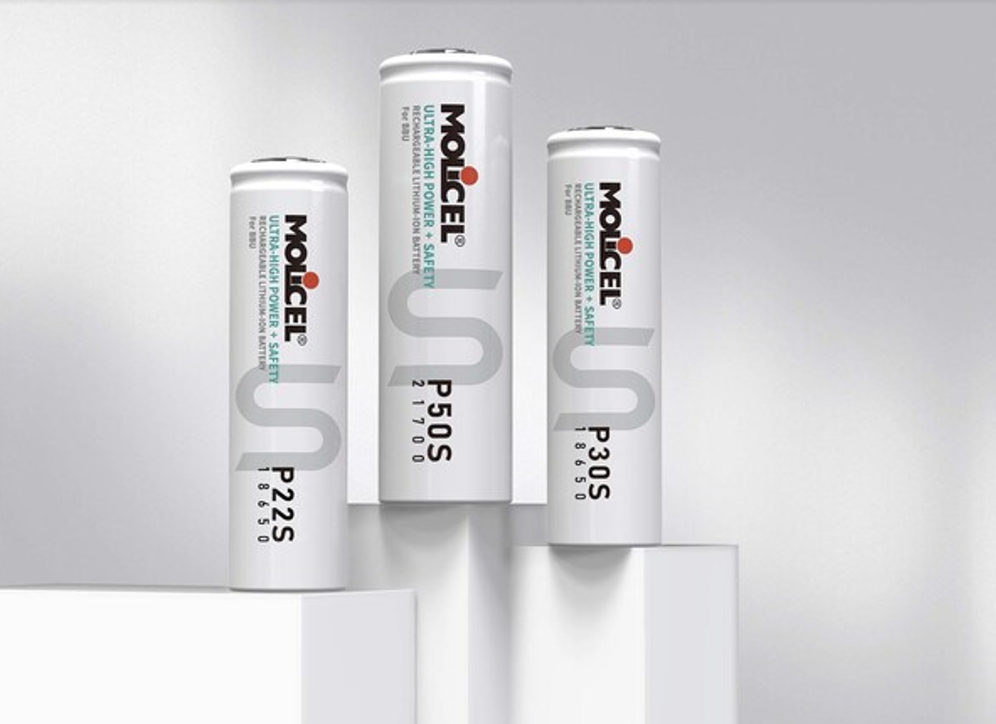
The Molicel INR-21700-P50S safety cell represents a breakthrough in backup battery technology, offering a unique combination of high energy density, reliable performance, and advanced safety features. Designed to meet the rigorous demands of critical power systems, this cell ensures that backup units operate efficiently and securely even under challenging conditions. In this article, we explore what makes the INR-21700-P50S a game-changer for backup battery applications and why it is quickly becoming a preferred choice for reliable energy storage.
Key Specifications of the INR-21700-P50S
- Model: INR-21700-P50S
- Series: Safety Cell
- Application: Battery Backup Units (BBUs)
- Cell Type / Form: 21700 cylindrical
- Nominal Voltage: 3.6 V
- Typical Capacity: 5.0 Ah (18 Wh per cell)
- Standard Charge Current: 5 A
- Discharge Current: 100 A (high-power capability)
- Energy Density:
- Gravimetric: 260 Wh/kg (high energy per weight)
- Volumetric: 714 Wh/L (high energy per volume)
- Dimensions: 21.55 mm diameter × 70.15 mm height
- Weight: 71 g
- Certifications / Datasheet: Available from Molicel
Highlights
- Designed for compact backup and emergency power applications.
- Combines high energy density with ultra-high discharge capability.
- Lightweight and space-efficient for BBUs in data centers and AI computing.
- Proprietary low flammability technology ensures thermal stability for reliable long-term standby, achieving controlled venting without flame propagation.
Advanced Safety Engineering
The INR‑21700‑P50S are built with multiple safety features to ensure reliable and secure operation:
- Built-in Safety Mechanisms:
- CID (Current Interrupt Device): Stops current flow if internal pressure rises excessively.
- PTC (Positive Temperature Coefficient): Limits current in case of overheating, protecting the cell.
- Reinforced Separator: Provides an additional barrier between electrodes to reduce the risk of short-circuits.
- High-Temperature Tolerance & Thermal Stability: The cell is designed to operate safely over a wide temperature range without degradation or risk of failure.
- Protection Against Thermal Runaway: The battery is designed with safety features that stop it from overheating or reacting uncontrollably, even during heavy use or long-term storage.
Benefits
- Safer operation during heavy use or emergency activation.
- Long-term reliability in backup systems or standby applications.
- Reduced risk of overheating, short-circuits, or catastrophic failure.
This makes the P50S well-suited for BBUs where both performance and safety are essential.
Reliability Under Long-Duration Standby
The INR‑21700‑P50S is designed to stay dependable even when stored or unused for long periods:
- Low Self-Discharge: The cells lose minimal charge over time, ensuring they remain ready for use even after months or years in standby.
- Stable Chemistry: Advanced electrode and electrolyte design keep the cell stable during long-term storage, preventing capacity loss or performance degradation.
- Essential for Critical Systems: This reliability is crucial for BBUs and other applications where power must be available instantly, without prior cycling or conditioning.
Benefits
- Devices and backup systems are ready whenever needed.
- Reduces maintenance and replacement frequency.
- Ensures consistent performance in emergency or standby scenarios.
Superior Performance During Emergency Activation
The INR‑21700‑P50S is built to provide reliable, high-power output whenever sudden energy demand arises:
- Consistent Power Delivery: The battery provides stable energy output immediately, even during rapid or unexpected discharge events.
- Low Internal Resistance: This allows the cell to respond quickly to high-current demands, minimizing voltage drops and ensuring smooth performance.
- Voltage Integrity Under Load: The cell maintains stable voltage levels during high-load situations, supporting connected devices or systems without interruption.
Benefits
- Ensures BBUs operate reliably under sudden power draw.
- Reduces the risk of performance drops or device shutdown during peak load events.
- Supports safe, predictable operation even in demanding, high-stress scenarios.
Enhanced Durability and Longevity
The INR‑21700‑P50S is built for long-lasting performance, maintaining capacity and reliability even under the intermittent charging and discharging typical of backup and standby applications:
- Long Calendar Life: The cell maintains reliable capacity over many charge/discharge cycles, even if usage is infrequent or intermittent.
- Resistance to Capacity Fade: Stable chemistry and optimized internal design help prevent degradation from irregular charging patterns typical in backup systems.
- Durable Construction: Reinforced electrodes, separators, and thermal management reduce stress during operation, extending the cell’s usable life.
Benefits
- Fewer battery replacements and lower maintenance costs over time.
- Reliable performance during long-term standby or emergency use.
- Greater system uptime and confidence in critical applications such as BBUs or emergency power systems.
Energy Density Advantages for Compact Backup Units
The INR‑21700‑P50S has a high energy density, meaning it can store a lot of power in a small, lightweight size:
- Space-Efficient Design: High volumetric energy density allows more energy to be stored in a smaller physical footprint, perfect for space-constrained enclosures.
- Lightweight Packs: High gravimetric energy density means battery packs are lighter, improving portability and ease of installation for wall-mounted or mobile backup units.
- Practical Benefits: Enables longer runtime in the same space, reduces material use, and allows designers to create slimmer, more efficient backup systems without compromising power.
Applications
- HVDC(High Voltage Direct Current) Infrastructure
- Data center and AI computing
Comparison With Traditional Backup Battery Cells
The INR‑21700‑P50S is better than traditional 18650 cells, LiFePO₄, or lead-acid batteries because it stores more energy, is safer, and performs more reliably over time.
- Higher Energy Density: More energy per cell means smaller, lighter packs compared with older or smaller-format cells.
- Improved Safety-to-Energy Ratio: Built-in safety features (CID, PTC, reinforced separator) and thermal stability reduce the risk of failure or thermal runaway, even in long-term standby.
- Consistent Long-Term Performance: Low self-discharge and stable chemistry ensure reliable operation over years of intermittent use or standby conditions.
- Extended Lifespan: Built to last, and the battery can handle more charge/discharge cycles with less capacity loss, reducing the need for frequent maintenance or replacements.
Backup systems can store more energy in less space and deliver reliable power safely over long periods for UPS, telecom, and emergency uses.
Ideal Applications for the P50S
The INR-21700-P50S is an ultra-high power cell designed to secure reliable energy for critical infrastructure and demanding power systems. As an ideal solution for BBUs, the P50S can provide instant high power (150-200W) when a power outage occurs. Its compact size and high energy density make it exceptionally well-suited for use in tight spaces like server racks. This foundational capability positions the P50S as the essential core component across several high-growth, high-demand sectors:
- Data Center BBUs: The P50S is ideal for providing robust, critical power supply to modern hyper-scale data centers, supporting high-demand hardware. Molicel’s S Series is already shipping to major Cloud Service Providers (CSPs) for BBUs.
- AI and Computing: Designed to ensure reliable, high-power delivery for demanding AI computing applications, including the critical adoption of NVIDIA GB300 GPU-equipped servers.
- HVDC (High Voltage Direct Current) Infrastructure: The P50S supports the new 800V HVDC power systems, ensuring the greater efficiency and stability required by this advanced data center infrastructure.
Things to Keep in Mind
- Real-world performance depends on pack design, thermal management, and BMS.
- Not optimized for very long-term storage without maintenance.