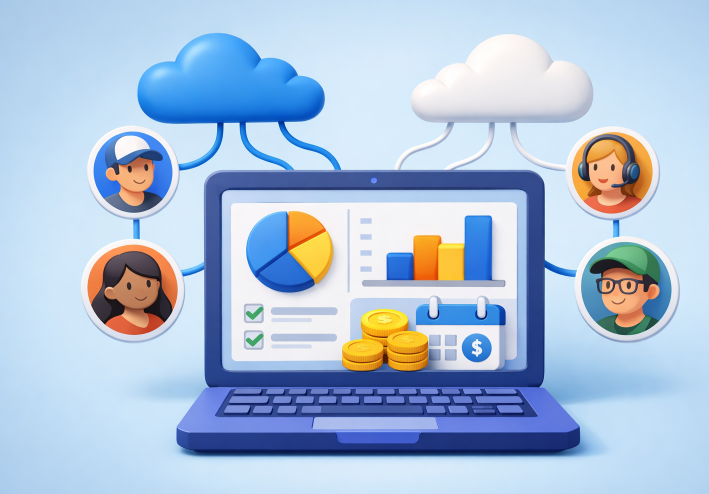
In today’s fast-paced business environment, efficient payroll management is more crucial than ever. Traditional payroll systems often struggle to keep up with the flexibility and speed requirements of modern organizations. This necessity has led many companies to explore innovative technologies, such as adopting a cloud payroll solution, which provides significant benefits over traditional approaches. As businesses become more decentralized and responsive, cloud-based payroll systems are becoming indispensable tools for forward-thinking organizations.
Cloud-based payroll services improve not just how payroll tasks are performed, but also how teams collaborate across multiple locations. With features such as remote access, streamlined processes, and lower maintenance costs, businesses of all sizes can optimize how they pay employees and manage payroll compliance. This article examines the tangible benefits of implementing cloud-based payroll systems and highlights key features that can help any company thrive.
Enhanced Accessibility and Flexibility
One of the most prominent advantages of cloud-based payroll systems is the level of accessibility they offer. Geographical location is no longer a barrier, allowing payroll and HR administrators to work from anywhere there is an internet connection. This flexibility supports remote work environments and hybrid workforces, ensuring payroll operations continue smoothly regardless of where teams are located.
Employees can now access their pay statements, tax documents, and benefits information anytime on demand. This enhances transparency and improves overall employee satisfaction. Additionally, it eliminates bottlenecks in traditional office-based systems and simplifies the handling of time-sensitive payroll tasks.
Cost-Effectiveness
The shift to a subscription-based cloud payroll platform eliminates the need for large upfront investments in servers, hardware, and IT maintenance. Businesses pay for only what they need, with easy options to scale up or down as employee headcount changes. This pay-as-you-go model leads to predictable expenses and helps organizations reallocate resources to other growth-oriented initiatives.
Moreover, updates and maintenance are handled by the cloud payroll provider, reducing the workload for in-house IT teams. Companies can minimize costly downtime and avoid hiring specialist staff for software patches or troubleshooting.
Improved Data Security
Safeguarding sensitive payroll and personal data is a central concern for any business. Cloud-based payroll systems offer multiple layers of security, such as advanced data encryption, secure backup protocols, and multifactor authentication. This comprehensive approach helps to protect against data breaches, cyberattacks, or accidental loss of information.
Leading cloud payroll providers adhere to international security standards, including SOC 2 Type II and ISO 27001. Regular independent audits and compliance reviews are standard, providing peace of mind that confidential employee data is well-protected.
Seamless Integration with Other Systems
Businesses increasingly turn to integrated technology solutions to reduce repetitive data entry and the risk of errors. Cloud-based payroll systems are built with robust APIs, making it easy to integrate with accounting software, time-tracking tools, human resources platforms, and other business-critical applications.
This integration streamlines workflows, increases efficiency, and ensures data consistency across all platforms. Real-time sync of employee hours, leave requests, and benefits administration helps HR and payroll staff to focus more on strategic projects rather than administrative work.
Scalability
Growing organizations need systems that grow with them. Cloud payroll platforms enable companies to seamlessly add or remove users, adjust permissions, and onboard new employees without system overhauls. Businesses with seasonal spikes or rapid expansion can scale the system quickly and efficiently.
There is no need for additional hardware, and training new users is simpler because many platforms offer intuitive interfaces and ongoing customer support. This flexibility is invaluable for businesses in industries where workforce size frequently changes.
Automation and Reduced Errors
Manual processing is prone to mistakes, especially when calculations are complex or when compliance rules change. Cloud payroll systems automate many standard tasks such as tax computation, benefits administration, and salary adjustments. Automated workflows reduce the likelihood of errors, ensuring accurate and timely paychecks for all employees.
Automation also extends to sending reminders for deadlines and updates about regulatory changes. This reduces stress on HR departments, saves time wasted on repetitive checks, and helps businesses avoid costly discrepancies.
Compliance and Legal Adherence
Payroll laws and tax regulations are constantly evolving, and non-compliance can result in fines and penalties. Cloud payroll software providers regularly update their systems in response to legislative changes, helping businesses remain compliant with national and local tax codes.
This proactive approach reduces employers’ exposure to compliance risks and helps ensure submissions and filings are completed on time and in accordance with the latest legal standards.
Employee Self-Service Portals
Self-service access empowers employees to manage their payroll information. They can review pay stubs, print tax forms, and update banking or personal details without waiting for HR intervention. This convenience improves their experience and reduces the number of queries HR staff need to manage.
Streamlining these administrative workflows means HR can dedicate more time to talent development, business culture, and other strategic objectives that directly support company growth.
Conclusion
Transitioning to a cloud-based payroll system offers organizations noteworthy advantages: improved accessibility, reduced costs, enhanced data security, seamless system integration, scalable operations, automated processes, up-to-date compliance, and greater employee autonomy. By leveraging these strengths, businesses can create more resilient, efficient, and future-ready payroll operations that support ongoing growth and innovation.
Read Also: techinfobusiness.com