SEO has shifted dramatically over the past decade. What once worked—keyword stuffing, exact-match anchors, and over-optimized tags—no longer guarantees results. Search engines now focus on understanding meaning, intent, and context, rewarding websites that provide depth and authority. This evolution is best captured in Ben Stace semantic SEO case studies, where his practical application of semantic search reveals how businesses can win visibility and conversions in competitive niches.
These case studies show that semantic SEO isn’t theory—it’s a real-world strategy that helps content creators, businesses, and marketers outperform competitors by aligning with how Google interprets language. In this detailed article, we’ll unpack Stace’s approach, his framework, real-world examples, tools he uses, and actionable steps you can apply to achieve similar results.
What Is Semantic SEO?
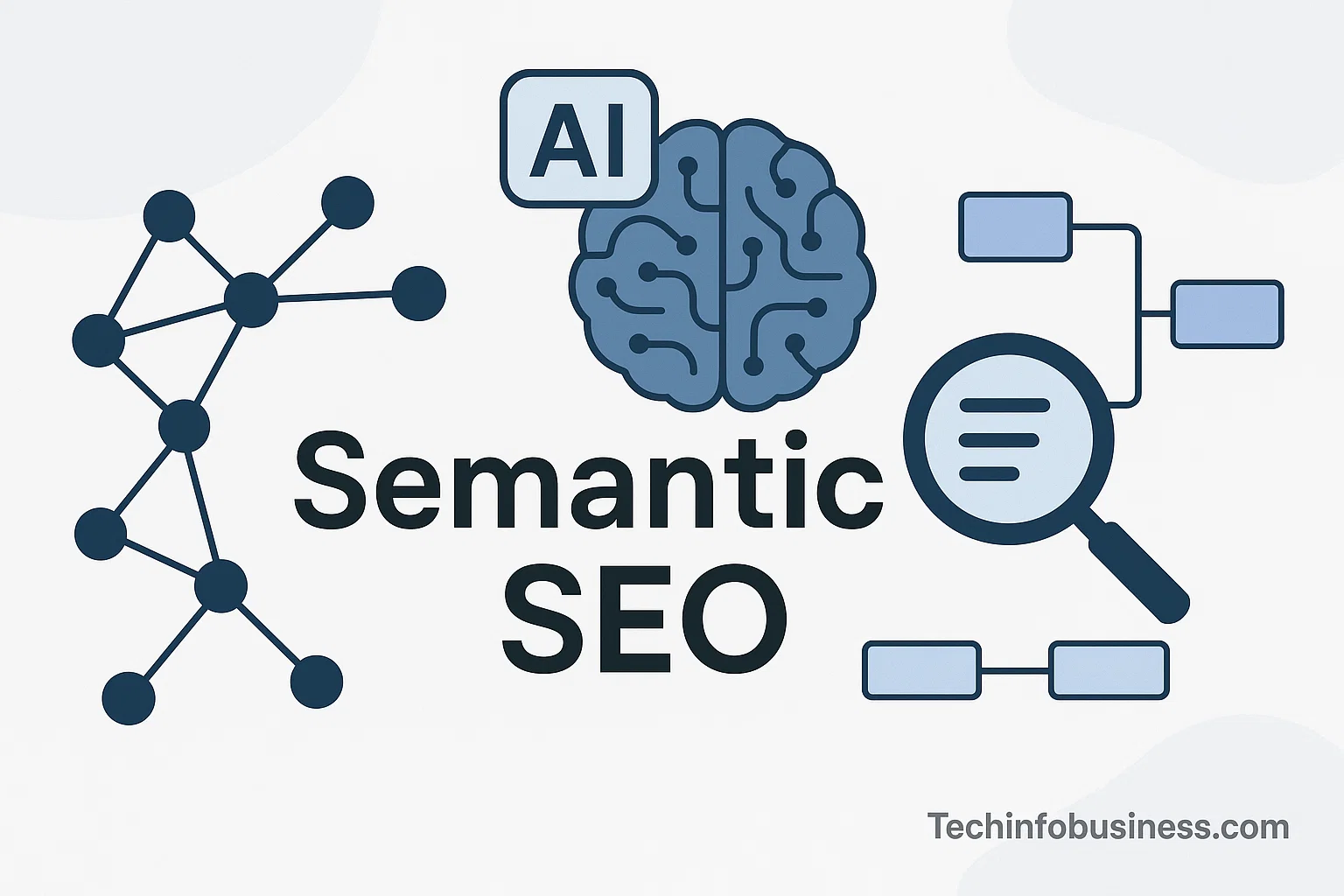
Semantic SEO is the practice of creating content designed around topics, intent, and entities rather than relying on exact-match keywords. Instead of writing 10 different posts for variations like “best laptops 2025,” “top laptops this year,” and “best laptop reviews,” semantic SEO encourages building a pillar page on “Best Laptops” supported by cluster articles covering performance, price comparisons, and buyer FAQs.
The goal is to create a knowledge hub that covers every angle of a topic. By connecting related concepts and using structured data, content becomes easier for Google to interpret and more useful for readers. This approach directly aligns with updates like BERT and MUM, which emphasize understanding meaning rather than just words.
Who Is Ben Stace?
Ben Stace is a strategist known for applying semantic SEO across multiple industries, documenting his findings in case studies. Instead of pushing abstract theories, he focuses on measurable changes—showing how businesses improved rankings, gained featured snippets, and boosted conversions by adopting semantic search principles.
His work highlights that search optimization today requires entities, schema markup, and topical clusters, not just traditional keyword targeting. The case studies serve as blueprints for marketers who want to replicate proven strategies rather than experiment blindly.
Core Insights From Ben Stace Semantic SEO Case Studies
Analyzing these case studies, several recurring insights stand out:
- Keywords to Concepts – Stop chasing individual keywords; focus on broader topics that capture full searcher intent.
- Entity Optimization – Mentioning relevant people, places, brands, and tools builds contextual authority.
- Structured Data Usage – Adding schema markup like FAQ, Article, or LocalBusiness increases the chance of earning rich snippets.
- Content Clustering – Organizing content into pillar and cluster pages strengthens topical authority.
- User Intent Alignment – Understanding whether the searcher wants information, navigation, or a purchase is crucial.
These principles underpin all of his case studies and provide a roadmap for long-term SEO success.
Step-by-Step Framework (Based on His Approach)
Here’s a detailed framework extracted from the case studies:
| Step | Objective | Key Actions | Example Tools | Deliverables | KPIs to Track | Common Pitfalls |
|---|---|---|---|---|---|---|
| 1 | Discover topics & demand | Identify core topic, related subtopics, seasonality; capture real questions from users. | Google Trends, Search Console, AlsoAsked, Reddit, Quora | Topic universe list, demand map | Search volume coverage, topical gaps closed | Chasing only head terms; ignoring long-tail and questions |
| 2 | Map entities & relationships | Build an entity list (people, brands, places, concepts); define relationships/aliases. | Wikipedia/Wikidata, Google KG, InLinks, NLP APIs | Entity inventory + mini knowledge graph | Entity coverage %, entity salience in drafts | Treating entities as “keywords”; missing synonyms/aliases |
| 3 | Model search intent | Cluster queries by intent (informational, transactional, navigational, local); pick primary/secondary intents per page. | SERP review, People Also Ask, competitor outlines | Intent matrix per cluster/page | CTR by intent, pogo-sticking rate, dwell time | Writing one page for multiple conflicting intents |
| 4 | SERP & competitor gap analysis | Audit top results; log formats (how-to, comparison, list), word counts, schemas, media types; find gaps. | Manual SERP, SEO Minion, Sheets | Gap log (content elements competitors have/miss) | Share of voice, snippet ownership | Copying formats blindly; ignoring user needs |
| 5 | Plan information architecture & clusters | Define pillar page + supporting clusters; URL taxonomy; internal link plan (hub ↔ spokes). | Whimsical/Miro, Sheets | Cluster map, link blueprint, URL plan | Crawl depth, internal link equity, index coverage | Orphan pages; deep burying key pages |
| 6 | Create content briefs | Target entity set, questions to answer, subheadings, sources, EEAT notes, media needs. | Docs/Sheets, Clearscope/Frase/Surfer | SEO brief per page with outline & FAQs | Brief adherence score, revision cycles | Thin briefs that ignore entities and intent |
| 7 | Draft & optimize content | Write long-form, human, intent-matched content; integrate entities naturally; add original data/examples. | Docs, Grammarly, Hemingway | Drafts with on-page SEO (titles, Hs, meta) | Readability, semantic coverage, time on page | Keyword stuffing; generic filler; no originality |
| 8 | Add structured data & enhancements | Implement JSON-LD (Article/FAQ/HowTo/LocalBusiness); add tables, images, video; ensure accessibility. | Schema generators, Rich Results Test | Valid schema, media set, fast & accessible page | Rich result rate, CLS/LCP, image/video CTR | Invalid/overlapping schema; slow media |
| 9 | Internal linking & UX | Insert contextual links; add breadcrumbs; optimize anchor text. | Screaming Frog, CMS | Link graph executed, breadcrumb trail | Crawl path, link clicks, assisted conversions | Generic anchors (“click here”); link stuffing |
| 10 | Publish, index & promote | Publish content; request indexing; promote via email, social, digital PR. | Search Console, Buffer, HARO | Live URLs, distribution checklist | Index time, referral traffic, early CTR | Publishing silently; no promotion plan |
| 11 | Measure, learn, iterate | Track rankings, CTR, snippets, engagement; test headlines/sections; improve weak pages. | Search Console, Analytics, Hotjar | Monthly performance report + action items | Snippet win rate, CTR lift, bounce rate | Measuring only rankings; ignoring UX signals |
| 12 | Refresh & expand | Update stats, add FAQs, expand clusters, prune thin content. | Content calendar, Sheets | Refresh log, new cluster plan | Content freshness wins, traffic from updates | One-and-done content; no refresh cadence |
Real-World Results
One of the most compelling parts of Ben Stace semantic SEO case studies is the measurable improvement seen in traffic and leads.
SaaS Case Study
A SaaS company had 50+ keyword-based blogs with flat traffic. After restructuring content into semantic clusters and adding FAQ schema, organic traffic grew by 40% in six months, with higher engagement times and lower bounce rates.
Local Business Case Study
A dental practice struggled with local search visibility. By adding LocalBusiness schema, building a content hub on oral health, and using semantic internal linking, the site earned featured snippets and increased organic leads by 58% within three months.
These examples highlight that semantic SEO benefits both global SaaS firms and local service providers.
Tools That Power His Approach
To apply his methodology effectively, certain tools and techniques play an important role:
- Entity Mapping: InLinks, Google NLP API, Wikipedia
- Content Optimization: SurferSEO, Clearscope, Frase
- Schema Markup: FAQ schema generators, JSON-LD tools
- Monitoring: Google Search Console, Analytics, Hotjar
Using the right tools ensures coverage, accuracy, and scalability.
Why Semantic SEO Works in 2025
Google’s algorithms prioritize meaning and authority. BERT interprets context, while MUM processes complex, multi-intent queries. This means thin keyword-targeted content gets ignored, while semantically rich, intent-matched content earns rankings and snippets.
The case studies prove that semantic SEO aligns perfectly with Google’s evolution—making it the future-proof strategy for businesses.
Mistakes to Avoid
The studies also reveal mistakes people make when trying to replicate semantic SEO without understanding it deeply:
- Stuffing keywords instead of focusing on entities.
- Creating standalone posts with no interlinking.
- Ignoring structured data opportunities.
- Writing without considering search intent.
These mistakes explain why many content strategies fail, even when they follow “SEO best practices” on the surface.
Actionable Steps for Your Own Content
- Audit your content and identify weak or overlapping posts.
- Consolidate into strong pillar pages.
- Build cluster articles and interlink them.
- Add structured data for better SERP visibility.
- Continuously update content with new entities and FAQs.
Following these steps mirrors the proven framework shown in Ben Stace semantic SEO case studies.
Read More: Google SEO Trends 2025: What’s Shaping the Search Landscape
Conclusion
The Ben Stace semantic SEO case studies highlight the reality of SEO in 2025: success comes from building topical authority, entity-driven content, structured data, and user-intent alignment. His documented results across SaaS and local businesses show measurable growth in rankings, snippets, and conversions.
For anyone serious about content success, the lesson is simple: semantic SEO isn’t optional—it’s the foundation of modern visibility. By applying Stace’s principles and framework, you can transform scattered content into an authoritative knowledge hub that earns trust from both search engines and readers.