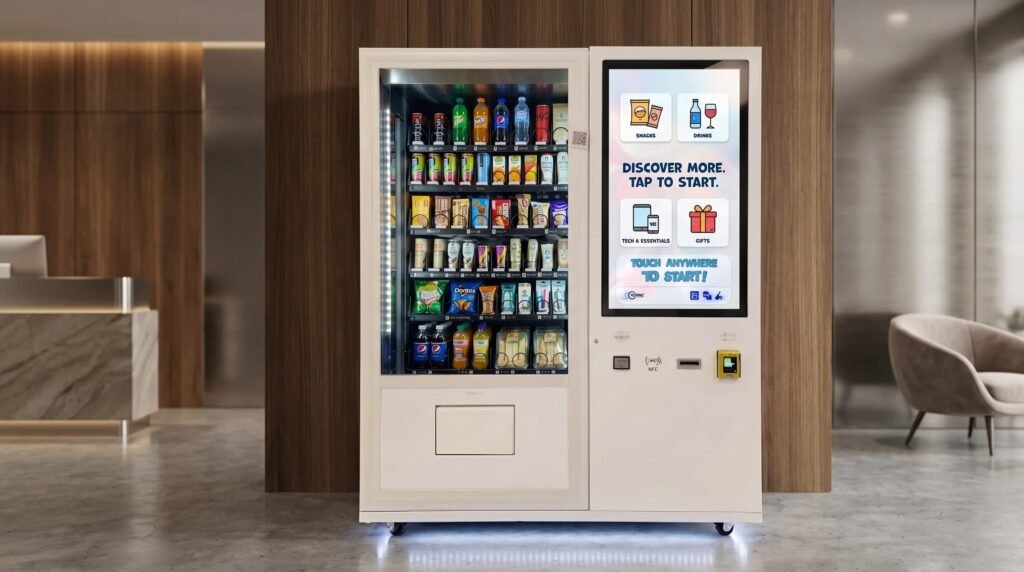
The classic vending machine was a mechanical device. A coin dropped through a slot, a lever released, a spiral coil turned and a snack fell into a tray. If something went wrong, nobody knew until the next service visit.
A modern custom vending machine is closer to a small robotic store. It has motion systems that handle the product, sensors that check each step, a touchscreen that runs the sale, payment hardware that takes cards, and a network connection that reports back to the owner. Here is how those layers work and why each one matters.
Robotics and dispensing mechanisms
The dispensing mechanism is the heart of the machine, and it is where custom builds differ most from standard ones.
Conventional snack machines rely on spiral coils, and many drink machines use stacked columns or small lifts. These work well for packaged goods with a predictable shape. Products that are fragile, frozen, oddly shaped or made to order need something else.
That is where robotics comes in. A robotic arm can move a cup between stations, assemble a serving or perform a task in full view of the customer. Some machines turn preparation into the attraction: a cotton candy robot, for instance, uses a robotic arm to spin sugar into flowers and other shapes while guests watch. Robotic soft-serve machines build each cup to order from the customer’s choices on the screen.
For a new product, the mechanism is usually designed around the item itself and tested as a prototype before full production.
Sensors
Sensors are what let a machine run without an attendant. They answer simple questions continuously. Did the product actually drop? Is the door closed? Is the freezer at the right temperature? Is the cup in position? Is a supply running low?
Common examples include optical sensors that confirm a product reached the delivery area, temperature sensors in chilled or frozen compartments, and position sensors inside the mechanism. When a sensor reports a problem, the software can halt the sale, reverse the charge or flag the issue instead of leaving a customer empty-handed.
Touchscreens and ordering software
Buttons and coin slots have largely given way to touchscreens on newer machines. The screen does several jobs at once. It shows the menu, walks the customer through options such as flavors or toppings, displays brand content between sales and explains what is happening while an item is prepared.
The ordering flow is software design in the full sense. Every extra tap is a chance for a customer to give up, so good flows are short, visual and forgiving of mistakes.
Card payments and barcode scanning
Cashless payment is standard on modern machines. Card readers, typically supporting contactless cards and phone wallets, sit alongside or replace bill acceptors and coin devices. Integration is the hard part: the payment system has to talk to the vending software so that a customer is only charged when the product is actually delivered.
Barcode scanning adds another layer. A scanner can read a ticket, a membership code or a product label, which opens the door to refills, redemptions and member-only items. At Hersheypark, a cup-shaped machine that sells refillable souvenir cups pairs a giant display with a barcode scanner and smart inventory tracking.
Inventory tracking and remote monitoring
For operators, the biggest change is visibility. Connected machines report sales, stock levels and faults in real time, usually through a dashboard or a mobile app. Instead of visiting a machine to find out what it needs, an operator receives an alert when cups, mix, toppings or product run low, or when something requires attention.
The same data feeds business decisions: what to stock, where to place the next machine and which options to drop.
How the layers fit together
None of these systems works alone. A single sale might involve the touchscreen taking an order, the card reader authorizing payment, the robotics preparing or retrieving the product, sensors confirming each step, and the monitoring system logging the sale and updating inventory. The engineering challenge in a custom machine is making those layers behave as one, including when something fails halfway through.
That is why builders test complete units, not just individual parts, before delivery. The custom projects described on sweetrobo.com, the site of U.S. robotic vending machine builder Sweet Robo, are organized around the same building blocks: robotics, dispensing mechanisms and sensors; screens, ordering flow and software; card payments, barcode scanning and inventory tracking.
What buyers should ask
For businesses evaluating a machine, the technology questions are practical:
- How does the machine confirm that a product was delivered before charging?
- Which payment methods does it accept, and can they be changed later?
- Can on-screen content be updated remotely?
- What does the monitoring app report, and what triggers an alert?
- How are faults diagnosed and supported once the machine is in the field?
The answers say more about long-term reliability than the cabinet design does. A machine that looks striking but cannot report its own problems will cost its owner time on every service visit.