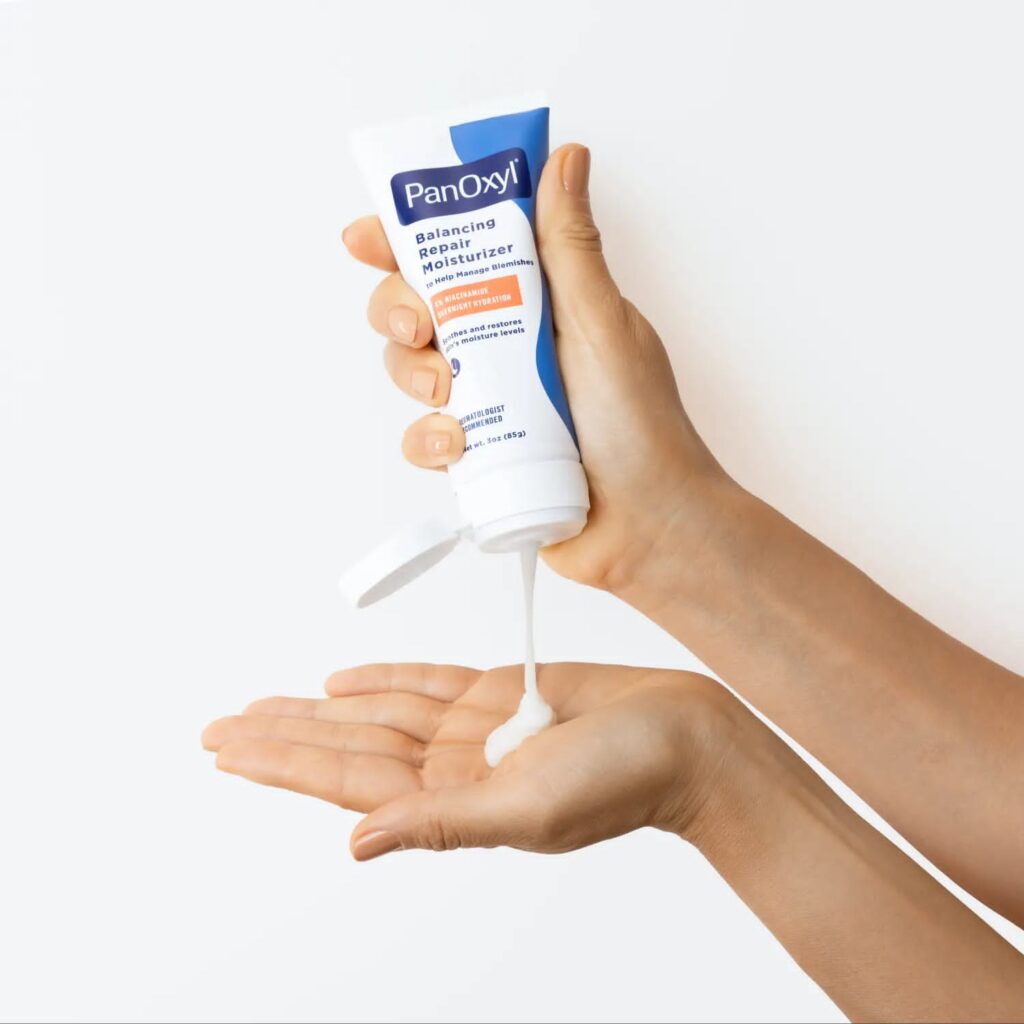
If you’ve ever Googled ’is niacinamide good for acne?’, you’re one of many making that kind of search. In the last few years, this quiet little ingredient has become a skincare staple, especially for anyone who’s tired of harsh treatments that leave skin angry or flaky. But behind the hype, there’s a reason people are reaching for it.
Niacinamide isn’t a trend. It’s a steady, supportive workhorse that can make a real difference when you’re dealing with breakouts. And unlike some ingredients that require a complicated routine, niacinamide is surprisingly easy to work with.
So, Is Niacinamide Good for Acne or Not?
Yes, particularly if your breakouts tend to be painful, oily or angry and red. Niacinamide’s a type of vitamin B3 and one of its main jobs is to add strength to your skin’s barrier while also reducing redness and gently taking the heat out of things.
The thing is, when answering the question, ‘Is niacinamide good for acne’, you have to know it’s going to take a little time to see results. It’s not the kind of ingredient that blasts pimples in 24 hours. Instead, it plays the long game, reducing the chance of new breakouts while quietly fading leftover redness and helping your skin feel less reactive. People who stick with it often notice:
- Fewer shiny patches and less oil during the day
- Reduced redness, especially around the nose or chin
- Fewer dry patches when using stronger treatments
- A smoother feel, even when active breakouts are present
In other words, it’s about providing your skin with some stability. It’s the kind of unpredictability your skin craves when it’s been through a lot.
How to Use Niacinamide for Acne-Prone Skin
You don’t have to search hard to find niacinamide these days. It’s in serums, toners, and even some cleansers. But the easiest, most effective way to work it into your routine? Use a moisturizer that already contains it, especially one built for acne-prone or combination skin.
Look for a formula that also includes:
- Ceramides, which help rebuild the skin barrier
- Panthenol, a calming agent that reduces reactivity
- Glycerin, for lightweight, non-greasy hydration
A good repair moisturizer brings all of that together, pairing 5% niacinamide with barrier-supporting ingredients that give your skin just what it needs. That means hydration without heaviness, comfort without clogging, and since these products are typically fragrance-free and non-comedogenic, they fit easily into a routine that includes treatments like benzoyl peroxide or salicylic acid.
If you’ve ever found yourself skipping moisturizer out of fear it’ll break you out, this kind of formula can change that. It’s proof that support doesn’t have to mean shine or congestion.
Brass Tacks: Is Niacinamide Good for Acne in the Long Run?
Absolutely. It’s one of the few ingredients that delivers on multiple fronts, and it’s great for calming inflammation, balancing oil, fading dark marks, and strengthening your skin’s defences. It won’t do the whole job alone, but if you’re building a routine for breakout-prone skin, niacinamide is one of the smartest pieces to include.
So, if you’ve been wondering why your skin still feels irritated even when your breakouts are fading, this might be the fix you’ve been missing. A good repair moisturizer with niacinamide built in offers a practical, no-fuss way to give your skin exactly what it’s asking for.