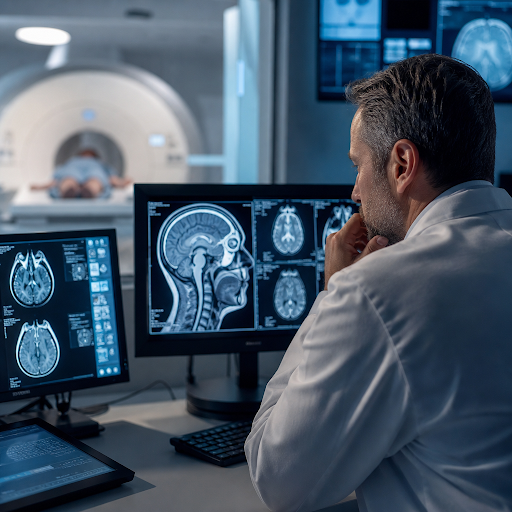
Modern medicine has entered an era where the accuracy of a diagnosis can be just as life-saving as the treatment that follows. Nowhere is this more evident than in the intersection of neurological imaging and cancer detection — two disciplines that have evolved dramatically over the past two decades. From high-resolution MRI scans that map brain tumors with millimeter precision to dermatological assessments that catch melanoma in its earliest stages, the tools available to clinicians today are transforming patient outcomes across the board. Understanding how these specialties work together, and what patients should look for when choosing a care provider, is essential for anyone navigating a complex diagnosis.
The Critical Role of Imaging in Neurological Diagnosis
Neurological conditions — ranging from stroke and multiple sclerosis to brain tumors and vascular malformations — share one common challenge: they are largely invisible to the naked eye. Unlike a broken bone or an external wound, disorders of the brain and spinal cord require sophisticated imaging technology to be identified, staged, and monitored. This is where neuroradiology becomes indispensable.
Neuroradiology is a subspecialty of radiology focused exclusively on diagnosing and characterizing diseases of the central and peripheral nervous system using imaging modalities such as MRI, CT, PET scans, and angiography. A skilled neuroradiologist does not simply read images — they interpret complex visual data in the context of a patient’s clinical history, symptoms, and lab results to provide a comprehensive diagnostic picture. This level of expertise is what separates a general radiology department from a truly specialized one.
Why Subspecialty Expertise Matters
The brain is arguably the most complex organ in the human body, and its imaging reflects that complexity. Subtle signal changes on an MRI can indicate early demyelination, a developing aneurysm, or the infiltrative margins of a glioma. Missing these findings — or misinterpreting them — can delay treatment by weeks or months, with potentially devastating consequences. Subspecialty neuroradiologists are trained to recognize patterns that generalists may overlook, making their involvement in complex neurological cases not just beneficial but often critical.
Patients seeking care for neurological symptoms should prioritize institutions where imaging is interpreted by dedicated specialists rather than generalist radiologists. The difference in diagnostic accuracy can be significant, particularly for rare or atypical presentations.
Oncological Imaging: Bridging Neurology and Cancer Care
The overlap between neuroradiology and oncology is substantial. Brain metastases — cancer cells that have spread to the brain from primary tumors elsewhere in the body — are among the most common neurological complications of systemic cancer. Accurately identifying the number, size, and location of these lesions is essential for planning surgery, radiation therapy, or systemic treatment. Similarly, primary brain tumors such as glioblastoma require precise imaging not only for initial diagnosis but for ongoing monitoring of treatment response.
Beyond the brain, imaging plays a pivotal role in detecting cancers of the skin, which represent one of the most prevalent cancer types globally. While skin cancer is often diagnosed through visual examination and biopsy, advanced imaging techniques are increasingly used to assess lymph node involvement and detect distant metastases. This is where the qualities of a specialized oncology clinic become paramount — and understanding what distinguishes an exceptional skin cancer clinic from an average one can help patients make more informed decisions about their care.
Multidisciplinary Collaboration as a Standard of Care
The most effective cancer care today is delivered not by individual specialists working in isolation, but by multidisciplinary teams that bring together oncologists, surgeons, radiologists, pathologists, and other experts. In this model, the neuroradiologist sits at the center of the diagnostic conversation, providing the imaging data that informs every subsequent clinical decision. Tumor boards — regular meetings where complex cases are reviewed collectively — rely heavily on imaging interpretation to guide treatment planning.
This collaborative approach ensures that no single perspective dominates the diagnostic or therapeutic process, reducing the risk of errors and improving the likelihood of identifying the most appropriate treatment pathway for each individual patient.
Ambulatory and Outpatient Imaging: Expanding Access to Specialized Care
One of the most significant shifts in modern healthcare delivery has been the movement of complex diagnostic procedures from inpatient hospital settings to outpatient and ambulatory care environments. This transition has made specialized imaging more accessible, more convenient, and in many cases, more cost-effective for patients. According to resources on ambulatory surgery and diagnostic centers, these facilities are designed to provide high-quality care with shorter wait times and a more patient-centered experience than traditional hospital settings.
For neurological and oncological imaging specifically, outpatient MRI and CT facilities staffed by subspecialty radiologists represent a growing and valuable option for patients who do not require hospitalization but still need expert-level diagnostic interpretation. The key is ensuring that the facility’s radiologists have the appropriate subspecialty training to handle the complexity of the cases being referred to them.
Cleveland Clinic Abu Dhabi: A Center of Excellence in Neuroradiology
For patients in the Middle East seeking world-class neurological imaging, Cleveland Clinic Abu Dhabi stands as one of the region’s most distinguished destinations. The institution’s neuroradiology department is staffed by fellowship-trained specialists who bring international expertise to the interpretation of complex neurological and neurovascular imaging studies. Operating under the same clinical standards as the renowned Cleveland Clinic in the United States, the Abu Dhabi facility offers patients access to cutting-edge imaging technology alongside the diagnostic rigor that complex neurological conditions demand.
The department handles a broad spectrum of cases, from routine brain MRIs to highly specialized studies such as functional MRI, MR spectroscopy, and cerebral angiography. This breadth of capability, combined with a multidisciplinary care model, ensures that patients receive not just an image interpretation but a clinically meaningful diagnostic assessment that directly informs their treatment.
What to Expect from a High-Quality Neuroradiology Service
When evaluating a neuroradiology service, patients and referring physicians should look for several key indicators of quality. These include the subspecialty credentials of the radiologists, the range and caliber of imaging equipment available, the turnaround time for reports, and the availability of direct consultation between radiologists and treating clinicians. Institutions that invest in all of these areas tend to deliver consistently superior diagnostic outcomes.
Equally important is the integration of neuroradiology within a broader clinical ecosystem. A neuroradiology department that operates in close collaboration with neurology, neurosurgery, oncology, and other relevant specialties is far better positioned to contribute meaningfully to patient care than one that functions as a standalone reporting service.
Conclusion: Precision Imaging as the Foundation of Modern Medicine
Whether the concern is a neurological symptom that defies easy explanation or a cancer diagnosis that requires precise staging, the quality of diagnostic imaging underpins every subsequent clinical decision. Patients deserve access to subspecialty expertise, advanced technology, and a care model that places their individual needs at the center of the diagnostic process. As both neuroradiology and oncological imaging continue to advance, the institutions and clinicians who embrace these developments will be best positioned to deliver the accurate, timely diagnoses that patients depend on. Choosing the right facility — one with proven expertise, modern equipment, and a commitment to multidisciplinary collaboration — is not a luxury. It is a fundamental component of receiving the best possible care.