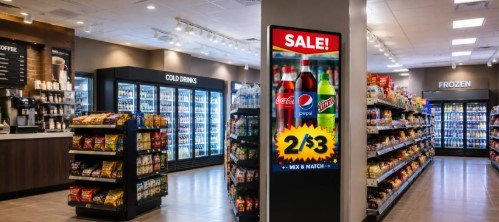
The Shift from Traditional Broadcast to Place-Based In-Store TV
The advertising landscape for convenience stores has undergone a significant transformation. While traditional broadcast television still holds a place in broader brand awareness campaigns, the advent of place-based in-store TV advertising offers a more targeted, impactful, and measurable approach, particularly for driving immediate foot traffic and sales. This distinct form of media leverages the unique environment of convenience stores and gas stations to engage consumers at a critical point in their purchasing journey.
Unlike traditional TV, which broadcasts to a general audience in their homes, convenience store TV advertising delivers messages directly to consumers who are already in a retail environment or are about to enter one. This shift from a passive, at-home viewer to an active, on-the-go shopper fundamentally changes the dynamics of engagement. We are talking about screens strategically placed at the fuel pump, within the store aisles, on cooler doors, or at checkout counters. These aren’t just digital billboards; they often feature dynamic video content, complete with sight, sound, and motion, much like a traditional TV commercial, but with a highly localized and contextual relevance.
The primary difference lies in the audience’s mindset and location. Traditional TV viewers might be multitasking, channel surfing, or using DVRs to skip commercials. In contrast, convenience store patrons are often in a momentary “pause” state, making them highly receptive to relevant messages. This captive audience dynamic is a game-changer for advertisers.
Here’s a comparison to highlight these differences:
Feature Traditional Broadcast TV In-Store Retail Media Networks (C-Store TV) Audience Location At home, often distracted In or near a retail environment, actively shopping/fueling Engagement Context General entertainment, news Point-of-purchase, transactional mindset Ad Skipping High (DVR, streaming ad-blockers) Minimal to none (captive audience, short dwell times) Reach Measurement Ratings, impressions (often extrapolated) Verified impressions, foot traffic, sales lift Targeting Capability Broad demographics, geographic (DMA) Hyper-local (store, zip, DMA), behavioral Call to Action Brand awareness, website visits, future purchase Immediate purchase, in-store promotion, loyalty sign-up Content Length Typically 15-60 seconds Often shorter (15-30 seconds), highly concise Impulse Buying Impact Indirect, builds desire over time Direct, influences immediate purchase decisions Primetime Equivalence Defined by peak viewing hours Defined by high traffic times and extended dwell
Capture Rates and Dwell Times Across Store Touchpoints
The effectiveness of convenience store TV advertising is intrinsically linked to the “capture rates” and “dwell times” at various touchpoints within the store and its forecourt. These moments offer advertisers a unique window of opportunity to connect with consumers.
Consider the gas pump: consumers typically spend 3 to 5 minutes fueling their vehicles. This is a significant, uninterrupted period where they are often looking for something to occupy their attention. Screens strategically integrated into the pump-top displays transform this routine task into a media consumption opportunity. Platforms like GSTV, for instance, reach over 115 million adults per month across more than 29,000 fuel retail locations, delivering content during this prime dwell time. This environment provides a captive audience that cannot channel surf or skip ads, ensuring high visibility for commercials.
Once inside the store, other formats come into play. Cooler-door displays, digital menu boards, and in-store digital signage at checkout queues or within aisles continue to engage shoppers. A platform like Grocery TV reaches 1 in 4 Americans through its in-store retail media network, strategically placing screens at key moments like the entrance, center store, pharmacy, and front end. These screens capitalize on moments when shoppers are making decisions – whether it’s choosing a beverage from a cooler, ordering food from a menu, or waiting in line to pay. The “sight, sound, and motion” of video advertising in these contexts can be incredibly persuasive, influencing impulse purchases and reminding shoppers of promotions just before they buy.
For example, Casey’s retail media network aims to have over 30,000 digital screens across its stores, further illustrating the scale and potential of these in-store networks. The constant flow of millions of monthly in-store visits nationally, combined with habitual fuel visits (1-3 times per week for many consumers), creates a high-frequency, high-attention environment that is difficult to replicate with other advertising channels.
Overcoming Ad Fragmentation and Media Skipping
In an era of fragmented media consumption and widespread ad-skipping technologies, convenience store TV advertising stands out as a powerful antidote. Traditional television has seen its audience increasingly dispersed across numerous channels, streaming services, and on-demand platforms. DVR technology and ad-blockers have empowered viewers to bypass commercials, diminishing the reach and impact of traditional spots.
However, the environment of a gas station or convenience store inherently solves many of these challenges. When a consumer is at the pump, they are literally a captive audience. There’s no remote control to change the channel, no DVR to fast-forward through the ads, and often, no immediate alternative distraction. This creates a unique scenario where advertisers can deliver unskippable video content to an engaged audience for several minutes. GSTV’s audience, for instance, would consistently rank among the top 10 most watched primetime TV shows weekly against highly desired 18-49 year olds, a testament to its reach and attention metrics.
Moreover, these platforms allow for sophisticated daypart scheduling, meaning ads can be tailored to specific times of the day when certain products or services are most relevant. For instance, breakfast items might be promoted during morning fueling hours, while dinner solutions could be featured in the late afternoon. This precision, combined with verified impressions (often tracked through digital playback systems), offers a level of accountability and effectiveness that traditional broadcast struggles to match. The natural pauses in a consumer’s journey – fueling, browsing, waiting in line – become prime opportunities for advertisers to deliver their message without the typical barriers of ad fragmentation or viewer avoidance.
How AI Convenience Store TV Advertising Transforms Campaign Performance
The integration of Artificial Intelligence (AI) is rapidly revolutionizing how brands approach convenience store TV advertising, moving beyond simple ad playback to highly optimized and responsive campaigns. AI-driven platforms enable programmatic buying, dynamic creative optimization, and precise targeting, making campaigns more efficient and effective than ever before. This advanced approach allows brands to deliver highly relevant messages to the right audience at the optimal moment, significantly enhancing the potential to drive foot traffic and conversions. For a deeper dive into how these technologies are shaping the future of retail media, exploring resources on AI convenience store TV advertising can provide valuable insights.
AI systems facilitate programmatic buying, allowing advertisers to bid for ad space across networks like Grocery TV, GSTV, Skoop, and EZ-AD TV based on specific audience segments, locations (down to DMA or zip code), and real-time conditions. This means campaigns can be activated and optimized automatically, ensuring budgets are spent efficiently to reach high-value shoppers. Dynamic creative optimization, powered by AI, takes this a step further by automatically adjusting ad content in real-time based on various triggers, ensuring the message is always fresh and relevant.
Personalizing Dynamic Creatives with AI Convenience Store TV Advertising
One of the most powerful applications of AI in convenience store TV advertising is its ability to personalize dynamic creatives. This goes far beyond static ads, allowing for messages that adapt to the immediate environment and consumer context.
- Weather Triggers: AI can automatically adjust ad content based on local weather conditions. For instance, on a hot day, ads for cold beverages or ice cream can be prioritized. On a rainy day, promotions for hot coffee or comfort food might take precedence.
- Inventory Syncing: Integrating with a store’s Point-of-Sale (POS) and inventory management systems, AI can ensure that only products currently in stock and available are advertised. This prevents customer frustration and maximizes the impact of promotions by focusing on what can actually be purchased.
- Automated Messaging & Time-of-Day Parting: AI can schedule and rotate messages based on the time of day, aligning promotions with typical consumer behavior. Morning commuters might see ads for breakfast sandwiches or coffee, while afternoon shoppers could be targeted with snack deals or dinner solutions. This is particularly effective for digital menu boards, where offerings change throughout the day.
- Point-of-Sale Data Integration: By analyzing historical POS data, AI can identify patterns in purchasing behavior and tailor ad content to promote complementary products or popular items. For example, if a particular snack often sells with a specific beverage, AI can create dynamic ad pairings.
This level of personalization ensures that the advertising displayed on pump-top screens, cooler-door displays, or in-store digital signage is always highly relevant, increasing its effectiveness and the likelihood of driving an immediate purchase.
Attribution and Measurement via AI Convenience Store TV Advertising
Measuring the direct impact of advertising has long been a challenge, but AI is providing sophisticated solutions for attribution and measurement in convenience store TV campaigns. This allows brands to move beyond mere impressions to understand actual sales lift and behavioral changes.
- Foot Traffic Attribution: Advanced AI systems can integrate with mobile device IDs and location data (with appropriate privacy safeguards) to track whether consumers exposed to an ad at a gas pump or in-store screen subsequently enter the convenience store. This provides a direct link between ad exposure and physical store visits.
- Sales Lift Analysis: By matching ad exposure data with anonymized POS data, AI can conduct lift analyses, comparing sales of advertised products among exposed groups versus control groups. This quantifies the direct sales increase attributable to the TV campaign.
- Loyalty Integrations: When integrated with loyalty programs (like 7-Eleven’s 7Rewards or Casey’s loyalty program), AI can track whether members who saw an ad then purchased the promoted item, offering a clear view of campaign effectiveness among a key customer segment.
- QR Engagement: The inclusion of shoppable QR codes in TV ads allows for direct, measurable engagement. AI can track scans, website visits, and even purchases made after scanning a QR code, providing a clear path to conversion from screen to sale.
- Baseline Metrics: AI platforms establish baseline metrics before a campaign begins, allowing for accurate measurement of incremental foot traffic, brand recall, and sales lift against a pre-campaign average. This robust attribution helps brands understand the true ROI of their convenience store TV advertising efforts.
Brands like PepsiCo, which partnered with GSTV, leverage these capabilities to connect with consumers at the moment of truth, translating consumer connections into measurable sales. This data-driven approach allows for continuous optimization, ensuring campaigns are always performing at their peak.
Strategic TV Ad Formats and Content Best Practices
Effective convenience store TV advertising requires a strategic approach to both ad formats and content. Given the unique environment and consumer mindset, certain best practices emerge for maximizing impact on pump-top screens, cooler-door displays, and in-store digital signage.
The typical spot length for convenience store TV ads often ranges from 15-second to 30-second ads. While 30-second spots allow for more storytelling, 15-second ads are highly effective for quick, punchy messages, especially in environments with shorter dwell times or high message rotation. Regardless of length, visual hooks are paramount. Ads need to grab attention quickly, often without sound initially, as consumers might be focused on other tasks. Clear calls-to-action (CTAs) are also critical. Since the goal is often immediate action (e.g., “Grab a cold drink inside!” or “Try our new coffee!”), the CTA should be concise, prominent, and actionable.
For example, campaigns by 7-Eleven often feature short, impactful spots that highlight specific products or promotions, designed to be easily digestible by on-the-go consumers. QuikTrip’s “Savor Summerhood” campaign, while using longer-form storytelling for broader brand building, also created shorter, visually striking segments for various digital placements, demonstrating the adaptability of creative across different formats.
Balancing Fuel Forecourt Ads and In-Store Merchandising
A key strategy in convenience store TV advertising is the seamless integration of fuel forecourt ads with in-store merchandising efforts. The goal is to convert the forecourt audience into in-store shoppers, leveraging the captive time at the pump to influence purchasing decisions inside the store.
Forecourt ads, particularly on pump-top screens, should act as powerful motivators for in-store visits. They can promote snack promotions, beverage bundles, or grab-and-go items that are readily available just steps away. For instance, a 15-second ad for a “buy one, get one free” coffee special at the pump can directly lead a consumer into the store. This creates a direct path from ad exposure to purchase. The “roadside reset” concept, often used by brands like Speedway, positions the convenience store as a place for personal recharging, not just vehicle refueling, encouraging customers to step inside for a break and a purchase.
Brands like PepsiCo strategically use gas station TV to promote their beverages at the pump, knowing that consumers are moments away from entering the store where those products are sold. This point-of-purchase advertising is highly effective because it reaches consumers when they are most receptive and closest to making a buying decision. The synergy between what’s advertised outside and what’s promoted inside is crucial for maximizing forecourt conversion and boosting overall sales.
Emotional Storytelling and Lifestyle Positioning
While convenience stores are often associated with quick transactions, effective TV advertising can tap into deeper emotional connections and lifestyle positioning. Brands that succeed in this space often go beyond product features to build cultural resonance and brand affinity.
QuikTrip’s campaigns, such as “More Than a Gas Station” and “Savor Summerhood,” are prime examples. Instead of just showing gas prices, they leverage nostalgia and pop culture references, creating sitcom-style commercials or emotionally resonant films that connect products to recognizable summer rituals, road trip experiences, or everyday moments. This approach positions the convenience store as an integral part of the consumer’s lifestyle, rather than just a utility. By focusing on emotional branding, QuikTrip differentiates itself in a market where “gas and snacks look identical from one chain to the next.”
Similarly, 7-Eleven’s “Roll-Up & Refuel™” campaign targets specific lifestyle subcultures like skateboarders and car enthusiasts, portraying the convenience store as a cultural pit stop. These ads connect with commuter habits and road trip rituals, making the brand feel relevant and relatable. By telling stories and evoking feelings, convenience store TV ads can build stronger, long-term brand preference, encouraging repeat visits and loyalty beyond transactional convenience. This strategy is particularly powerful when aligned with seasonal promotions, creating timely and emotionally resonant campaigns.
Technical and Operational Infrastructure for Screen Networks
Deploying and managing a successful convenience store TV advertising network requires robust technical and operational infrastructure. This involves more than just plugging in a few screens; it encompasses the hardware, software, connectivity, and ongoing support necessary to deliver dynamic content at scale.
At the core are commercial digital displays, which are designed for continuous operation and often come with enhanced durability compared to consumer-grade televisions. These displays are integrated into various formats, including pump-top screens, cooler-door displays, and digital menu boards.
Managing content across potentially thousands of screens requires a sophisticated cloud-based Content Management System (CMS). Platforms like Skoop and EZ-AD TV offer such solutions, allowing store operators or network administrators to remotely manage, schedule, and update content for multiple locations from a central dashboard. This includes creating custom playlists, setting up automated menus, and scheduling vendor ad campaigns in advance. Skoop, for example, allows updates to go live in seconds from a cloud-based dashboard, and EZ-AD TV boasts a plug-and-play setup that can get screens running in under 5 minutes, manageable via a mobile app.
Broadband connectivity (WiFi or Ethernet) is essential for content delivery and real-time updates. Without reliable internet access, dynamic content changes, programmatic ad insertions, and system monitoring would be impossible.
POS integration is becoming increasingly vital. Connecting the digital signage network with the store’s point-of-sale system allows for dynamic pricing updates, inventory syncing, and more accurate sales lift attribution. This ensures that advertised promotions are always current and available.
Finally, remote maintenance and 24/7 customer support are crucial operational requirements. Given the distributed nature of convenience store networks, the ability to remotely diagnose issues, push software updates, and provide immediate assistance ensures maximum uptime and effective ad delivery. These operational considerations ensure that the convenience store TV network functions as a reliable and dynamic advertising channel.
Frequently Asked Questions About C-Store TV Campaigns
As brands increasingly recognize the power of convenience store TV advertising, several common questions arise regarding its practical implementation and effectiveness.
What dwell times can advertisers expect from convenience store TV?
Advertisers can expect significant dwell times, particularly at gas pumps and checkout lines. At the fuel pump, consumers typically spend 3 to 5 minutes during fueling, providing a captive audience for video content. Inside the store, dwell times vary but can be substantial in checkout queues, where customers are often looking for distraction. Cooler-door displays also capture attention as shoppers browse. These extended, often uninterrupted, periods contribute to high attention metrics, making the advertising highly impactful compared to fleeting glances at other out-of-home media.
How do programmatic platforms target shoppers at gas station screens?
Programmatic platforms leverage advanced data and technology to target shoppers with precision. This typically involves DMA mapping (Designated Market Area) and zip-code targeting, allowing brands to run campaigns in specific regions or neighborhoods. Beyond geography, contextual rules are applied, such as time-of-day parting (e.g., promoting breakfast items in the morning), weather triggers (e.g., cold drinks on hot days), and even inventory syncing (e.g., advertising only products currently in stock). This ensures that ads are highly relevant to the local audience and current conditions, maximizing their effectiveness.
Can TV commercials track in-store sales lift directly?
Yes, increasingly, convenience store TV commercials can track in-store sales lift directly through sophisticated attribution methods. This is achieved through:
- POS data matching: Anonymized transaction data from the store’s Point-of-Sale (POS) system can be matched against ad exposure data to identify incremental sales of advertised products.
- Mobile device IDs: With proper privacy protocols, aggregated and anonymized mobile device data can be used to track foot traffic from ad exposure points (like gas pumps) into the store, and then to specific purchase zones.
- Loyalty program integration: For stores with loyalty programs, ad exposure can be linked to loyalty member purchases, providing direct insights into campaign effectiveness among frequent shoppers.
- QR code engagement: Shoppable QR codes embedded in ads allow for direct tracking of scans and subsequent online or in-store purchases. These methods enable robust lift analysis, providing brands with clear ROI benchmarks and a deeper understanding of how their TV advertising drives tangible results.
Conclusion
In October 2026, convenience store TV advertising stands as a formidable force in the retail media landscape, offering an unparalleled opportunity for brands to connect with high-intent shoppers. This dynamic channel transcends the limitations of traditional broadcast by delivering unskippable, contextually relevant messages to a captive audience during crucial moments of their purchasing journey. From pump-top screens engaging drivers for minutes to in-store digital signage influencing impulse buys at the cooler door, the extensive reach and impressive dwell times create an environment ripe for impactful advertising.
The continuous innovation, particularly through the integration of AI, is further solidifying its position. AI-driven programmatic buying, dynamic creative optimization, and precise attribution capabilities are transforming campaigns from broad awareness plays into highly targeted, measurable drivers of foot traffic and sales lift. By leveraging emotional storytelling, balancing forecourt ads with in-store merchandising, and building robust technical infrastructures, brands can achieve significant ROI.
For marketers seeking an omnichannel reach that truly influences the point of purchase, convenience store TV advertising is no longer just an alternative; it is an essential component of a unified video strategy. It empowers brands to optimize campaigns in real-time, engage consumers effectively, and ultimately, drive measurable success in a competitive retail environment.
Read Also:- https://techinfobusiness.com/