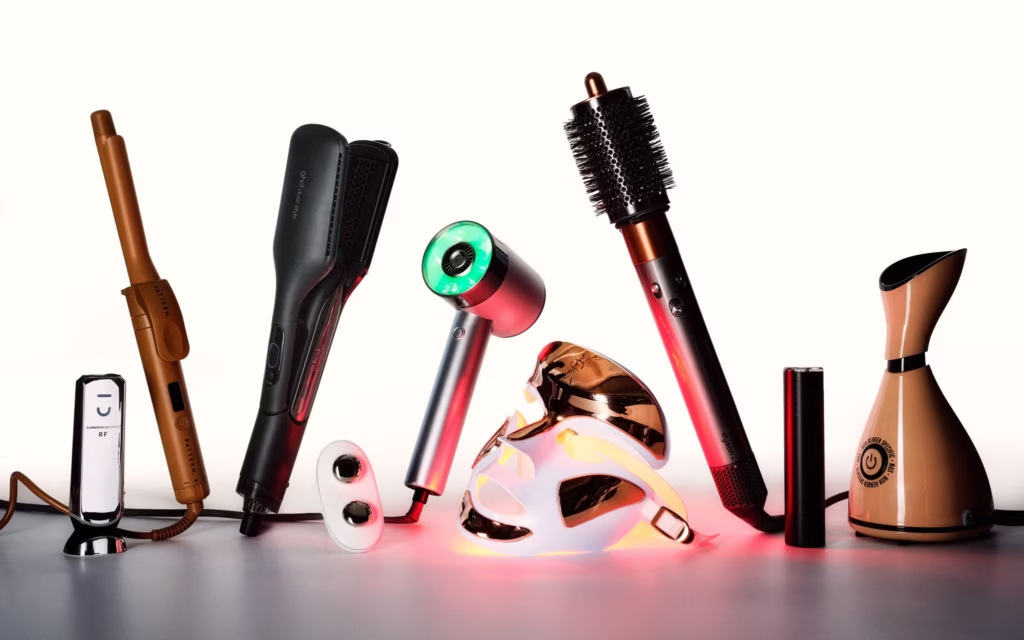
What consumer buying behaviour can teach us about building a beauty routine you’ll actually stick to
If you’ve ever opened your bathroom drawer looking for one trimmer and accidentally discovered three forgotten beauty gadgets, welcome to the club.
There’s the jade roller you swore would become part of your nightly ritual. The heated styling brush that looked life-changing after a late-night Instagram scroll. The facial cleansing device you bought during a “Buy 2, Get 1” sale because, well, it would’ve been rude not to.
And then there’s the newest launch sitting proudly in its box, waiting for the “right time.”
We’ve all been there.
It’s easy to laugh at these little purchases, but they reveal something fascinating about consumer buying behaviour. We rarely buy beauty tools just for what they do today. More often, we buy them for the person we hope we’ll become tomorrow.
That’s why the conversation around the best at-home beauty tools for women is becoming more interesting than ever. The real question isn’t which product has the most features. It’s which one actually earns a permanent place in your routine.
Why Every New Beauty Launch Feels Like the One
Think about the last viral grooming tool you almost bought.
Maybe someone on YouTube said it would cut your morning routine in half. Maybe an influencer called it their “holy grail.” Maybe it had thousands of glowing reviews and a countdown timer saying Only 2 hours left.
Suddenly, it didn’t feel like another purchase. It felt like the missing piece of your routine.
That’s not poor decision-making. That’s consumer psychology at work.
Our brains naturally love novelty. New products promise fresh starts, better habits and easier mornings. For a moment, buying the product feels almost as satisfying as achieving the result.
It’s why beauty product buying habits often have less to do with need and more to do with possibility.
When Beauty Drawers Become Time Capsules
Every Indian home seems to have that one drawer.
The one with expired sheet masks, two eyebrow razors, three hair accessories you’ll definitely wear “someday,” and enough charging cables to power a small salon.
The funny part? None of these products were bad purchases individually.
They simply arrived faster than they became habits.
That’s where buying products you don’t need quietly turns into beauty gadget clutter. Not because consumers are careless, but because life gets busy. Monday meetings happen. Weddings come and go. The Sunday self-care routine disappears after two weeks because your maid took the day off, your relatives landed unannounced, or IPL finals somehow became a full-day event.
Reality has a way of interrupting even the best intentions.
More Features Don’t Always Mean More Value
The beauty industry has entered an era where almost every launch promises to do more.
One tool trims.
Another trims, shapes, exfoliates, massages, polishes and somehow claims to improve your confidence before breakfast.
Today’s multifunctional beauty tools for women are genuinely impressive. Many of them save space, reduce clutter and simplify grooming routines.
But here’s an honest question.
How many of those functions will you realistically use after the excitement wears off?
Most of us don’t need fifteen settings before getting ready for work. We need something reliable that works well at 8:30 on a Monday morning when the cab is already outside.
Sometimes convenience beats complexity. Like a simple foldable Face Razor for Women.
The Beauty Tools We Keep Using Are Rarely the Most Complicated Ones
Ask any friend about the grooming products they genuinely love.
Chances are they won’t mention the fanciest gadget they own.
They’ll talk about the trimmer that’s always charged.
The styling tool that never snags their hair.
The facial device they can use while watching Netflix.
The products that survive beyond the honeymoon phase all have one thing in common.
They’re easy.
That’s an important lesson in consumer buying behaviour.
People don’t build routines around products that demand perfection. They build routines around products that fit real life.
Before You Click “Buy Now,” Ask Yourself These Five Questions
If you’re trying to practice mindful shopping without sucking the joy out of discovering new beauty products, try this simple checklist.
- Am I replacing something, or just adding another version of it?
- Will this genuinely save me time?
- Can I imagine using it once a week six months from now?
- Does it fit my current routine rather than an imaginary future routine?
- Would I still buy it if it wasn’t trending on social media?
If the answer to most of these is yes, you’re probably making a much smarter purchase.
That’s how to make better buying decisions without feeling like you’re depriving yourself.
Better Beauty Routines Start with Better Buying Decisions
The beauty industry will never stop innovating, and honestly, that’s a good thing.
Many new launches genuinely make self-care easier, faster and more enjoyable.
The goal isn’t to stop buying beauty products.
It’s to stop expecting every purchase to reinvent your life.
Whether you’re investing in one of the best at-home beauty tools for women or upgrading to multifunctional beauty tools for women, the smartest purchase is rarely the one with the biggest feature list.
It’s the one like a 6-in-1 brow to Bikini Trimmer that quietly becomes part of your Sunday reset, your weekday rush or your vacation packing list.
Because that’s what real value looks like.
Not another unopened box.
A product that earns its place in your routine.
And perhaps that’s where beauty trends in 2026 are taking us- not toward owning more but toward choosing more intentionally.
In a world overflowing with launches, reels and “must-have” recommendations, the best beauty tool isn’t the newest one.
It’s the one you’ll still be reaching for long after the hype has faded.